Call: 07971405285
 Send Inquiry

 Send Inquiry
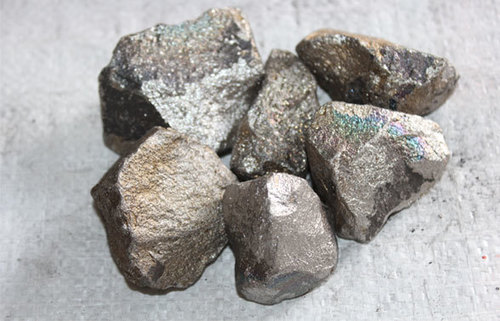
L.C.Ferro Chrome Lump
L.C.Ferro Chrome Lump Specification
- Impurity Content (%)
- 75%
- Dimensions
- Lump Millimeter (mm)
- Mesh Size
- Variable / as required
- Product Type
- Ferroalloy
- Alloy
- Other
- Shape
- Lump
- Size
- 25mm - 150mm
- Weight
- Depends on packaging
- Application
- Steel manufacturing, foundry, metal alloy industry
- Color
- Grey to dark grey
- Phosphorus (%)
- 0.03% Max
- HS Code
- 72024900
- Supply Ability
- Bulk or as required by client
- Standard Packaging
- Loose or in jumbo bags
- Moisture (%)
- 1% Max
- Carbon Content (%)
- 0.03% Max (Low Carbon)
- Silicon (%)
- 1.5% Max
- Chromium Content (%)
- 60-65%
- Sulphur (%)
- 0.03% Max
- Market
- Domestic and International
L.C.Ferro Chrome Lump Trade Information
- Minimum Order Quantity
- 25 Metric Ton
- Payment Terms
- Cash on Delivery (COD)
- Supply Ability
- 1000 Per Month
- Delivery Time
- 15 Days
- Packaging Details
- 1Mt bag
- Main Domestic Market
- All India
- Certifications
- Cr 60% Min, 65% Min, 70% Min
L.C.Ferro Chrome Lump About
After understanding the ever changing requirements of industry, we are providing our customers with a large gamut of L.C.Ferro Chrome. Our range of chrome is precisely produced by eliminating the ores of chrome with ferro silicon chromium. These are broadly applicable for the trimming additions required for production of stainless steel. We make available the collection of L.C.Ferro Chrome with fine packaging options and at reasonable rates.
Features:
- Reduced carbon contents
- Long lasting attributes
- Stable properties
Further Details:
L C Ferro Chrome
Specification:
Cr : 60% Min
C :0.1% Max
Si :1.5% Max
P :0.03% Max
S :0.02% Max
Size :10-50mm (90% Min)
&
Extra L C Ferro Chrome
Specification:
Cr :60% Min
C :0.03% Max
Size :10-50mm (90% Min)
&
LC Ferro Chrome
Specification:
Cr :65% Min
C :0.1% Max
Size :10-50mm (90% Min)
Origin :Chinese/Russian
Premium Low Carbon Composition
This L.C.Ferro Chrome Lump offers a chromium content between 60-65%, alongside an exceptionally low carbon value (max 0.03%). Its minimized presence of sulphur, phosphorus, and silicon ensures compatibility with applications where alloy purity significantly impacts final product quality. This makes it an optimal choice for demanding metallurgical processes.
Customizable Packaging and Sizing
The product can be delivered either loose or packed in jumbo bags, depending on logistical needs and order size. It accommodates variable mesh sizes and lump dimensions from 25mm up to 150mm, providing flexibility for different industrial requirements and furnace configurations.
Extensive Usage in Steel and Alloy Industries
L.C.Ferro Chrome Lump is essential for steel production, foundries, and the metal alloy sector. Its low impurity levels help manufacturers achieve precise alloy compositions and superior mechanical properties in finished products. Exported and imported globally, it meets the high standards expected in modern metalworking.
FAQ's of L.C.Ferro Chrome Lump:
Q: How is L.C.Ferro Chrome Lump used in the steel manufacturing process?
A: L.C.Ferro Chrome Lump is added during the steelmaking process to introduce chromium, which enhances hardness, corrosion resistance, and strength. Its low carbon content ensures that the final steel product maintains high ductility and minimal impurity levels.Q: What are the benefits of choosing low carbon ferrochrome with chromium content of 60-65%?
A: Choosing low carbon ferrochrome ensures precise control over mechanical properties, as it adds the desired chromium without significantly raising carbon content. This helps avoid unwanted carbides, allowing manufacturers to achieve specific performance targets in specialty steels and alloys.Q: When is it advantageous to use L.C.Ferro Chrome Lump over other forms of ferrochrome?
A: It is most advantageous when high-quality, low-carbon alloys or stainless steels are required. Using the lump form allows for easier handling and precise alloy adjustments, which is essential for producing steels with exacting specifications.Q: Where can L.C.Ferro Chrome Lump be supplied, and in what quantities?
A: L.C.Ferro Chrome Lump is available for both domestic and international markets. It can be supplied in bulk quantities or as per client-specific requirements, and is packaged either loose or in jumbo bags to accommodate transportation and storage preferences.Q: What is the typical packaging process for L.C.Ferro Chrome Lump?
A: The product is typically packed either loose or in durable jumbo bags, depending on the client's requirements and shipment volume. This process ensures safe handling during transit and storage while maintaining the product's integrity.Q: How does the size variation (25mm - 150mm) affect its usage in industry?
A: The size range allows customization for various furnace designs and charging systems. Larger lumps may be preferred for specific smelting technologies, while smaller sizes are ideal for processes requiring rapid melting and uniform alloy distribution.Q: What industries benefit most from using L.C.Ferro Chrome Lump?
A: Industries such as steel manufacturing, foundry operations, and metal alloy production benefit from its use. The product's controlled impurity levels and low carbon content make it indispensable for producing high-performance alloys.
Tell us about your requirement

Price:
Quantity
Select Unit
- 50
- 100
- 200
- 250
- 500
- 1000+
Additional detail
Mobile number
Email

More Products in Ferro Alloys Category

Medium Carbon Ferro Manganese
Price 99000 INR / Metric Ton
Minimum Order Quantity : 25Mt Tonnes
Impurity Content (%) : Max 2.5%
Application : Other, Steel making, foundries, smelting
Dimensions : Customized as per requirement
Product Type : Ferroalloy

Ferro Silicon Lump
Minimum Order Quantity : 25 Tons
Impurity Content (%) : 75%
Application : Steel Making, Steel Industry
Dimensions : Lump Millimeter (mm)
Product Type : Ferroalloy
MC FE Manganese
Price 1200 USD ($) / Metric Ton
Minimum Order Quantity : 25
Impurity Content (%) : Low impurity, typically less than 1%
Application : Other, Steel manufacturing, foundry industry, alloy production
Dimensions : Customizable as per requirement
Product Type : Other, MC FE Manganese

Moly Oxide And Ferro Moly Lump
Impurity Content (%) : <0.5%
Application : Other, Steel Alloying, Foundry, Metallurgy
Dimensions : Varied Lump Sizes (Customizable)
Product Type : Other, Industrial Mineral

Contact Details
METALIC CORPORATION INDIA
- 138, Canning Street, 1st Floor, Room No. 117,Kolkata - 700001, West Bengal, India
- Phone :07971405285
 Send Inquiry

Developed and Managed by Infocom Network Private Limited.
